
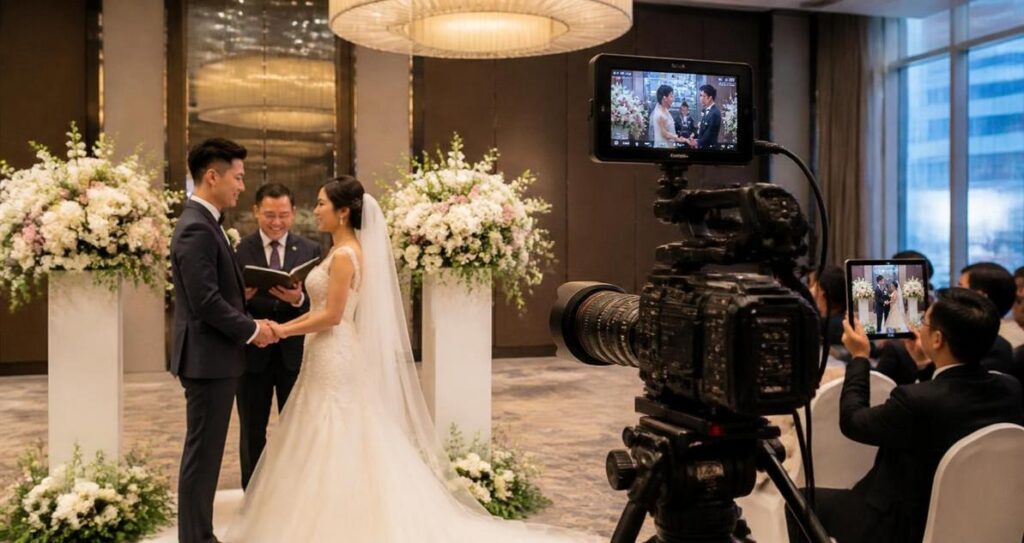
Wedding celebrations in Singapore often bring together family and friends from different generations, different countries, and sometimes very different health and travel realities. A professional wedding stream can make that experience more inclusive without replacing the warmth of a live gathering. When done well, it allows relatives overseas, elderly family members, young children, and guests who cannot attend in person to participate with dignity, clear sound, and a strong sense of occasion. For many couples, the question is not whether to stream the wedding, but how to do it in a way that feels polished, respectful, and reliable.
Professional wedding streaming is more than a camera pointed at a ceremony. It involves planning the viewing experience, managing sound and lighting, protecting privacy, and ensuring that the stream reflects the emotional tone of the day. In Singapore, where weddings may take place in a hotel ballroom, a church, a mosque, a temple, a restaurant, or a private venue, technical conditions can vary widely. A thoughtful setup helps the couple avoid common frustrations such as choppy video, poor audio, awkward camera angles, or guests online missing important moments. For an event that carries deep personal and cultural meaning, those details matter.
For guest experience, the goal is simple. Online viewers should feel included, not like they are watching a phone held by a distracted guest. In-person guests should also remain comfortable, with the stream integrated discreetly so it does not interrupt the ceremony or reception. The best wedding streams support both groups at once, creating a seamless bridge between physical and virtual attendance.
Why guest experience matters in professional wedding streaming
Guest experience is the overall impression a person forms from the moment they join a stream until the event ends. In a wedding context, that experience depends on more than image quality alone. It includes how easy it is to access the stream, whether the audio is intelligible, whether the event feels emotionally engaging, and whether remote guests can follow the ceremony without confusion. A professional stream recognises that a wedding is not a generic live broadcast, it is a personal milestone with social, cultural, and family significance.
In Singapore, families are often spread across neighbourhoods, regions, and countries. Some guests may be travelling for work or caregiving reasons. Others may be older relatives who find it difficult to move around or remain at venues for long periods. Streaming gives these guests access, but the production quality determines whether that access feels meaningful. A low-quality stream can make remote viewers feel excluded, especially if they cannot hear vows, speeches, or ritual segments clearly.
Professional production also reduces pressure on the couple and their families. Instead of asking a relative or friend to manage a phone camera, an experienced crew can handle framing, switching shots, audio pickup, and troubleshooting. This allows family members to stay present in the celebration rather than acting as unofficial technicians.
Core elements that shape a polished wedding stream
A strong wedding stream usually depends on four technical pillars: video, audio, connectivity, and direction. Each one affects how guests experience the event, and weaknesses in one area can undermine the entire stream. The aim is not cinematic complexity for its own sake, but clarity, stability, and emotional connection.
Clear video with intentional framing
Good video helps remote guests feel as if they are in the room. The framing should capture the couple, key participants, and important ritual moments without excessive movement or distraction. Wide shots establish context, while tighter shots preserve emotional detail during vows, ring exchange, or speeches. In a wedding setting, camera placement should avoid blocking the view of in-person guests or drawing attention away from the ceremony.
Lighting matters as much as camera quality. Indoor venues in Singapore may use mixed lighting, and some spaces have warm ambient light that looks flattering in person but inconsistent on camera. A professional team can correct exposure, balance colour temperature, and position cameras so faces remain visible rather than dark or washed out. This is especially important for evening receptions or venues with dramatic decor.
Audio that carries the meaning of the event
Audio is often the most important part of a wedding stream. Guests can forgive a slightly soft image, but if they cannot hear the vows, speeches, or ceremonial responses, the experience suffers immediately. Professional audio capture usually involves direct feeds from microphones, sound systems, or discreetly placed audio equipment. This produces cleaner sound than relying only on the camera’s built-in microphone.
Clear audio also supports accessibility. Older guests, viewers with hearing difficulties, and relatives watching on small devices benefit from speech that is understandable and free from echo or distortion. Background music, applause, and crowd noise should be balanced so they add atmosphere without overpowering speech. A sound check before the ceremony is essential, because venue acoustics can affect how voices carry.
Stable internet and backup planning
In live streaming, connectivity is not optional. A stable internet connection is essential to prevent freezing, buffering, or sudden disconnection. Singapore venues may offer venue internet, mobile data, or dedicated network arrangements, but the suitability of each option depends on the building, number of users, and expected stream quality. Professional crews typically test bandwidth in advance and choose the most reliable setup available.
Backup planning is equally important. This may include secondary internet access, spare batteries, additional recording devices, and contingency plans for equipment failure. Even a well-planned wedding can face unexpected disruptions, so redundancy protects the guest experience. If the stream must continue through a venue transition, technical team coordination becomes especially important.
How professional streaming improves inclusion for different guest groups
A wedding stream should make the event feel welcoming to a wide range of viewers. Different guests need different types of support, and professional production can meet those needs without making the experience feel fragmented. This is one of the main reasons many couples in Singapore now view streaming as part of guest hospitality rather than a technical add-on.
Supporting overseas family and friends
For relatives and friends living abroad, a live stream often becomes the only practical way to witness the ceremony in real time. Time zones can make attendance difficult, so a stream allows them to share the moment even when travel is impossible. Clear visuals and audio help them follow the event without needing constant explanation from others. Some couples also choose to provide a recording for later viewing, which can be useful when guests are unable to watch live.
Including elderly guests and those with mobility limitations
Not every family member can attend a venue comfortably. Some elderly guests may prefer to watch from home because of mobility issues, fatigue, or health concerns. A stable, easy-to-access stream lets them remain involved while reducing the strain of travel, stairs, long ceremony seating, or crowded transport. This is particularly relevant in Singapore, where travel is generally efficient, but large gatherings can still be physically demanding for older adults.
For these guests, practical considerations matter. Simple access instructions, readable links, and a stream that works on common devices can make a real difference. If the couple shares the access details in advance, family members can set up their televisions, tablets, or phones without stress.
Creating a better experience for multitasking guests
Some guests may attend in person but still want the option to revisit specific moments later. A professionally managed stream can support this by providing a recording after the event, subject to the couple’s privacy preferences. Others may be travelling between wedding functions, such as a ceremony, tea ceremony, and reception. A well-structured production helps them catch up if they miss a portion of the day. When the event is planned thoughtfully, the stream becomes part of a wider hospitality experience rather than a separate digital layer.
Planning a wedding stream that respects culture, privacy, and etiquette
In Singapore, weddings may include religious rites, family customs, and community expectations that deserve careful handling. Professional streaming must respect these contexts. That means discussing which parts of the event should be streamed, who may appear on camera, and whether any sections should remain private. A respectful approach is essential, especially when ceremonies involve prayer, sacred spaces, or family moments that are not intended for a broad audience.
Consent and privacy considerations
Before streaming, couples should consider who is being recorded and how the stream will be shared. Guests should be informed that filming or streaming is taking place. If the wedding includes children, elderly relatives, or participants who prefer not to appear online, camera placement and framing should account for that. In some cases, a private link or password-protected platform is more appropriate than a public broadcast.
Privacy also extends to the recording itself. Couples should decide whether the stream will be saved, who may access the replay, and how long it will remain available. A clear plan prevents misunderstandings later. Professional providers can help structure access, but the final decision should reflect the couple’s wishes and the sensitivity of the event.
Working within venue and religious guidelines
Different venues and religious settings may have their own rules for photography, filming, and microphone placement. Churches, mosques, temples, and banquet spaces may each have specific requirements. A production team should review these in advance and coordinate with venue staff, officiants, or family coordinators. This prevents delays on the day and ensures the stream supports the ceremony instead of disrupting it.
In many Singapore weddings, the program is tightly scheduled. That makes pre-event coordination especially important. The technical crew should know when key entrances, blessings, speeches, and symbolic actions will occur so they can anticipate each moment rather than react late. Good preparation leads to a smoother viewing experience for everyone.
Practical steps couples can take to enhance the viewing experience
Couples do not need to be technical experts to improve the quality of their wedding stream. A few practical decisions can significantly raise the standard of the guest experience. The main goal is to make the stream easy to access, easy to follow, and pleasant to watch from beginning to end.
- Share the access link early, so overseas guests can test it before the ceremony.
- Use a private or invitation-only setup if the guest list is limited or the event contains sensitive moments.
- Build in a rehearsal or technical run-through, especially for venues with multiple rooms or sound systems.
- Ask the production team how they manage audio capture, since speech clarity is central to the viewing experience.
- Confirm whether a recording will be provided after the event, and what format it will take.
- Coordinate with the emcee or programme lead so the stream follows the event flow without missed segments.
- Plan for reception announcements, speeches, and toasts, which often matter most to remote viewers.
These steps are straightforward, but they make a noticeable difference. A thoughtful plan helps the couple appear organised, and it helps guests feel considered rather than overlooked.
Choosing the right professional production support in Singapore
When selecting wedding streaming support, couples should look for experience with live event production, not just general video recording. Wedding streams require attention to timing, discretion, audio clarity, and coordination with venue operations. A provider familiar with Singapore event spaces can often anticipate challenges such as limited setup time, mixed acoustics, venue loading restrictions, and the need to work quietly around guests.
It is helpful to ask practical questions before confirming a provider. How many cameras will be used? How is the audio captured? What happens if the internet connection becomes unstable? Is a recording included? How will the team coordinate with the wedding planner or venue staff? The answers reveal whether the provider can deliver a calm, reliable experience or only a basic technical setup.
Professional support also helps preserve the tone of the occasion. A wedding stream should not feel intrusive or overproduced. The best production teams know how to stay discreet while still capturing the key emotional moments that matter to families. That balance is especially valuable in Singapore, where many weddings are intimate, highly planned, and rich in cultural meaning.
Enhancing the guest experience with professional wedding streams is ultimately about care. It allows couples to include more people, reduce stress for family members, and create a record of the day that feels both dignified and accessible. When the technical work is handled properly, guests can focus on what really matters, the vows, the rituals, the speeches, and the sense of shared celebration. For Singapore couples planning a wedding that is welcoming, polished, and memorable, professional streaming can be a meaningful part of the experience from start to finish.
This article provides general information only and is not a substitute for venue-specific advice, legal guidance, or personalised technical planning. Couples should confirm privacy, filming, and streaming arrangements with their chosen venue and production provider before the event.
Jeremy Lee is a seasoned digital marketing director and strategist with over two decades of experience in the industry. As the founder of Sotavento Medios, I manage a diverse portfolio of over 50 businesses, helping brands grow through advanced search strategies and digital innovation. My work focuses on bridging the gap between traditional search engine optimisation and the evolving world of AI-driven answer engines.
get in touch