

When people in Singapore watch a livestream, join a hybrid conference, or replay a recorded event on demand, they usually notice the smooth viewing experience, not the technology that makes it possible. Behind that experience, the encoder is one of the most important pieces of the streaming chain. A professional encoder converts audio and video into a digital format that streaming platforms can process, distribute, and deliver efficiently. When the encoder is reliable, the platform is more likely to stay stable, recover cleanly from disruptions, and provide consistent playback across devices and network conditions.
For organisations in Singapore, platform reliability matters because audiences expect high-quality viewing whether they are tuning in from the Central Business District, a home office in the heartlands, a school hall, or a conference venue at Marina Bay or Suntec. In business events, a poor stream can interrupt investor briefings, internal town halls, product launches, or government-related communications. In these settings, a professional encoder is not a luxury item. It is part of the operational foundation that supports dependable delivery, audio-visual clarity, and audience trust.
Understanding the role of professional encoders is useful for event organisers, communications teams, and technical buyers who want fewer playback issues and more predictable outcomes. The encoder does not work alone. It sits within a wider workflow that includes cameras, capture devices, networks, content delivery networks, and the streaming platform itself. Even so, encoder quality has a direct influence on stability, stream integrity, and the viewer experience. That is especially true when events involve multiple feeds, long runtimes, remote speakers, or strict delivery requirements.
What a professional encoder does in the streaming workflow
An encoder takes raw audio and video input and compresses it into a streamable format. Compression reduces the amount of data that must travel over the network while preserving as much quality as possible. In practical terms, the encoder prepares the signal so that platforms can distribute it efficiently to viewers with different internet speeds and different devices. This process is essential because raw video would require far more bandwidth than most online delivery systems can support.
Professional encoders are designed for greater stability, control, and flexibility than basic software-only setups or consumer-grade devices. They commonly support advanced encoding settings, multiple output profiles, redundant inputs, and protocol compatibility with widely used delivery systems. They may also provide hardware-based processing, which can help maintain consistent performance during long events, especially when a computer would otherwise be under heavy load from graphics, switching, recording, and other tasks.
Why encoding affects platform stability
Streaming platforms rely on receiving a clean, properly formatted signal. If the encoder produces inconsistent bitrate, unstable frame rates, or incorrect stream parameters, the platform may struggle to process the input reliably. That can lead to buffering, dropped frames, audio mismatch, or, in some cases, stream failure. A professional encoder helps reduce those risks by maintaining a steady output that matches platform expectations.
Reliability also depends on how the encoder handles changing conditions. For example, if network bandwidth fluctuates, a good encoder can support adaptive bitrate output or adjustable profiles that help preserve continuity. If one input source fails, some systems can switch to backup sources. These features do not guarantee perfection, but they significantly improve the chances of graceful recovery instead of visible disruption.
How professional encoders improve reliability for live and hybrid events
Live and hybrid events place pressure on every part of the production chain. Unlike pre-recorded content, live streams have no opportunity for post-production correction before the audience sees the result. That makes the encoder a critical control point. A professional encoder is often built to handle continuous operation, variable source quality, and the demands of simultaneous streaming and recording.
In Singapore, this matters for conferences with both physical and remote participants, multilingual events, training sessions for regional teams, and public-facing announcements that require dependable access. Hybrid formats are now common in corporate and institutional settings because they support broader participation without requiring everyone to be in the room. To work well, they need low operational friction and minimal failure points. The encoder helps by producing a consistent output that can be ingested by the platform, distributed to remote viewers, and recorded for later use.
Stable bitrate and frame rate management
Bitrate refers to the amount of data transmitted per second, and frame rate refers to the number of images shown each second. If these values shift unpredictably, the viewing experience can become choppy or unstable. Professional encoders allow operators to set and monitor these parameters carefully. That consistency makes it easier for platforms to buffer correctly, scale playback across devices, and keep the stream synchronized with audio.
For viewers, this translates into fewer interruptions and less visual distortion. For organisers, it means lower risk during high-stakes moments such as keynote speeches, live product demonstrations, investor questions, or ceremonial announcements. In a business environment, even a short drop in reliability can reduce confidence in the overall production.
Redundancy and failover support
Redundancy means having backup systems in place so that one fault does not bring down the entire stream. Many professional encoder workflows support backup power, dual network paths, secondary inputs, or paired encoding systems. Failover refers to the ability to switch from the primary path to the backup path with minimal interruption. These features are valuable when the event cannot easily be repeated.
In Singapore, venue and network planning often includes multiple layers of contingency because events may involve international speakers, time-sensitive announcements, and audiences joining from different locations. A professional encoder contributes to this resilience by being able to work within a structured redundancy plan rather than functioning as a single point of failure.
The technical features that matter most for reliability
Not every encoder is suited to demanding professional use. Buyers should look beyond simple resolution claims and focus on features that support stable operations over time. The most useful capabilities are usually the ones that reduce surprises, support monitoring, and make recovery easier when something changes unexpectedly.
Input and output compatibility
Professional workflows often involve cameras, switchers, capture cards, microphones, and third-party software. The encoder should accept the required input types and support the output protocols used by the target platform. Common live-streaming protocols include RTMP, which is widely used for ingest, and SRT, which is designed to improve reliability over unpredictable networks. Protocol selection should match the platform, venue, and transport conditions rather than being chosen for branding alone.
Compatibility also matters when the stream must be delivered to multiple destinations. Some organisations need to broadcast to a platform while also recording locally or sending a backup stream to a second endpoint. An encoder that supports these workflows can simplify production and reduce the risk of setup errors.
Monitoring and alerting functions
Reliable platforms depend on operators noticing problems early. Professional encoders may provide status dashboards, telemetry, and alerts for dropped packets, encoder overload, signal loss, or network failure. These functions help operators intervene before a minor issue becomes a visible interruption. In event production, early detection is often the difference between a brief adjustment and a full stream restart.
Monitoring is especially important for long-format programmes, such as all-day conferences, government forums, and training events. Singapore-based teams often run events across office hours and after hours, so the ability to observe system status remotely can be practical and time-saving. It also supports better coordination between production staff, venue technicians, and platform operators.
Hardware resilience and thermal management
Long streaming sessions place physical stress on equipment. Hardware encoders are often designed with better thermal management than general-purpose computers, which reduces the likelihood of overheating during sustained use. This matters in warm environments, crowded control rooms, or venues with limited airflow. A stable hardware design can be an important safeguard when events run for hours and there is little room for technical interruption.
It is also important to maintain the encoder properly. Reliable performance depends on suitable power supply, clean ventilation, up-to-date firmware, and correct configuration. Even a strong device can underperform if it is rushed into service without testing. Professional operation means treating the encoder as a managed system, not a plug-and-play accessory.
Platform reliability is about more than the encoder alone
Professional encoders play a major role in reliability, but they are only one part of the chain. A stable stream depends on the camera source, audio feed, production switcher, venue network, internet uplink, platform ingest servers, and playback infrastructure. Problems at any point can affect the audience experience. For that reason, good streaming practice treats reliability as a systems issue rather than a single-device issue.
This is particularly relevant in Singapore, where many organisations use shared venues, temporary event spaces, or corporate buildings with network policies that may require advance coordination. A reliable setup usually includes pre-event testing, bandwidth checks, backup connectivity, and clear operator roles. The encoder is central to these preparations because it determines how the signal is packaged and delivered to the platform.
Testing before go-live
Testing is one of the most effective ways to improve platform reliability. Production teams should verify audio levels, video resolution, stream delay, bitrate stability, and platform ingestion settings before the event starts. If a backup encoder is available, it should be tested as well. Testing should also include realistic content, such as slides, camera movement, lower-third graphics, and speaker transitions, because these can affect encoding load.
For Singapore events with international participants, it is wise to test across different network routes and device types. An encoding setup that works in a quiet office may perform differently in a busy venue with higher wireless traffic. Pre-event validation lowers the chance of avoidable disruption once the audience is present.
Backup planning for critical communications
Organisations that run high-visibility events should plan for disruption even when the primary system is robust. Backup planning may include a second encoder, a redundant internet connection, a local recording path, and a fallback communication method if the stream becomes unavailable. These measures support continuity and demonstrate operational maturity.
For internal corporate communications, fallback planning can be as important as it is for public events. Employees may be spread across offices, homes, and regional sites, and a failed stream can slow decision-making or leave teams without key information. A professional encoder strengthens the main path, while backup planning protects against exceptional situations.
Choosing an encoder with Singapore use cases in mind
Selection should be based on the kind of events an organisation actually runs. A small webinar setup has different needs from a multi-camera hybrid conference, and a recurring training programme has different risks from a one-time launch event. Buyers should consider how much control they need over quality settings, how much redundancy is required, and what level of technical support is available.
In Singapore, it is also sensible to think about venue constraints, multilingual delivery, and the need for reliable support during tight event timelines. Many production teams work within compressed setup windows, so an encoder that is easy to configure, monitor, and troubleshoot can save valuable time. The right choice is not necessarily the most complex device. It is the one that fits the workflow, matches the platform, and supports dependable operation under real conditions.
Questions to ask before purchase or rental
- Does the encoder support the platform ingest method and protocol required for the event?
- Can it maintain stable output for the planned resolution, frame rate, and bitrate?
- Does it offer monitoring, alerting, and backup options?
- Will it work with the existing cameras, audio equipment, and switching setup?
- Is there a clear support plan for setup, testing, and live event troubleshooting?
These questions help teams avoid mismatched equipment and reduce operational risk. They also encourage a more disciplined approach to streaming, where reliability is built into the planning process instead of being left to chance.
Professional encoders strengthen platform reliability by making the stream more consistent, more controllable, and more resilient to common technical issues. They help preserve audio-visual quality, support backup workflows, and improve the odds that viewers receive a stable experience from start to finish. For Singapore organisations managing live and hybrid events, that reliability has direct practical value, because the audience experience often shapes how seriously the event, message, or brand is received.
If you are planning a livestream or hybrid production, the best results come from treating the encoder as part of a complete reliability strategy. Test the setup early, match the encoder to the platform requirements, build in redundancy where the event is critical, and make sure the technical team knows how to monitor the stream in real time. If the event matters, the encoding chain should be designed to support it with the same level of care as the content itself. This article is for general information and planning purposes, not a substitute for platform-specific technical guidance or professional production consultation.
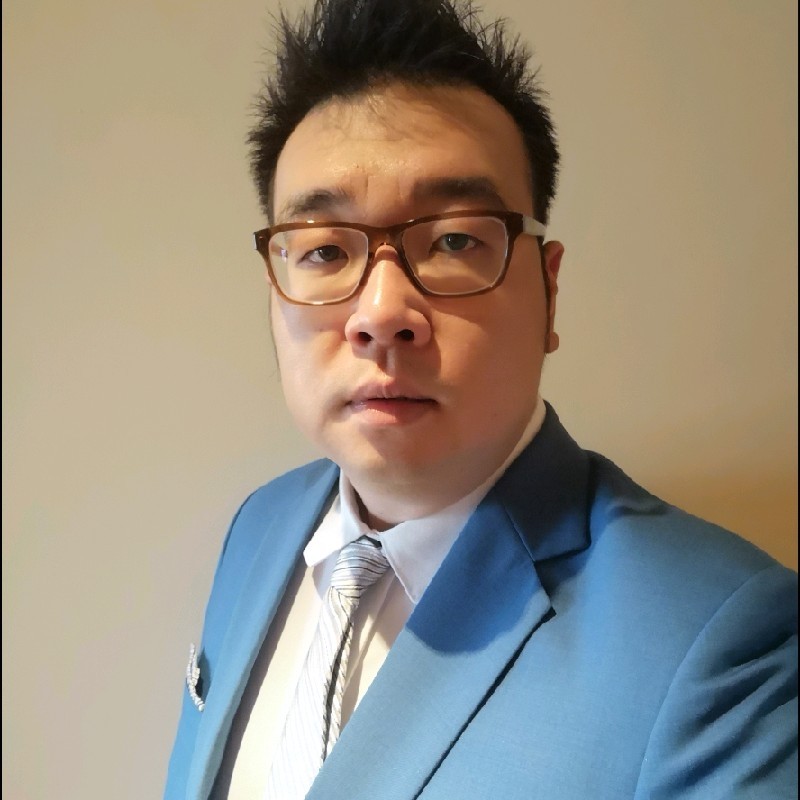
Jeremy Lee is a seasoned digital marketing director and strategist with over two decades of experience in the industry. As the founder of Sotavento Medios, I manage a diverse portfolio of over 50 businesses, helping brands grow through advanced search strategies and digital innovation. My work focuses on bridging the gap between traditional search engine optimisation and the evolving world of AI-driven answer engines.
get in touch