
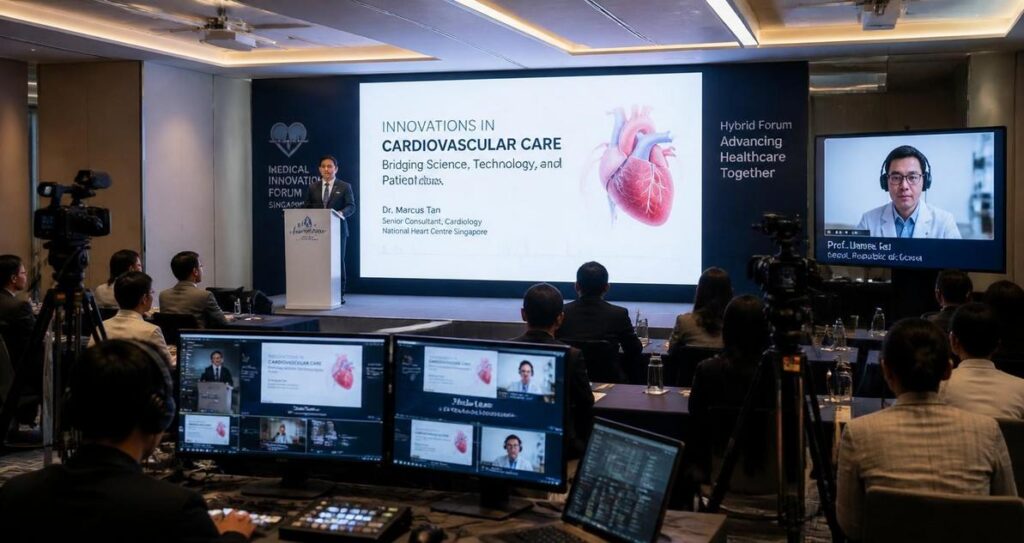
Professional medical and healthcare forums place a high burden on event delivery. Speakers often present complex clinical information, delegates may join from hospitals, clinics, universities, and home offices across Singapore, and the audience expects every detail to be clear, secure, and reliable. When these sessions are streamed poorly, participants can lose concentration, miss essential updates, or struggle to follow discussion that may influence clinical practice, professional education, or policy understanding. In a healthcare setting, the stream is not just a technical feature. It is part of how knowledge is shared, how teams stay aligned, and how professional standards are communicated.
In Singapore, this matters even more because healthcare professionals work across a tightly connected ecosystem that includes public hospitals, private specialists, community care, and research institutions. Hybrid formats now support continuing medical education, multidisciplinary case discussions, product briefings, and public health forums. A well-executed stream helps organisers reach busy clinicians who cannot always travel, while preserving the professionalism expected in medical communication. It also supports accessibility for international speakers, regional collaborators, and participants who need to attend remotely due to clinical schedules.
Achieving streaming excellence for medical and healthcare forums requires more than a camera and a stable internet connection. It calls for careful planning, audio clarity, privacy protection, audience engagement, and a production workflow that respects the seriousness of healthcare content. The most effective event teams treat streaming as a clinical communication channel, one that must be accurate, dependable, and controlled from start to finish.
Why medical and healthcare forums demand a higher streaming standard
Medical forums are different from general corporate events because the content often has real-world implications for patient care, professional conduct, and institutional decision-making. A poorly framed slide, delayed audio feed, or unstable connection can make a clinical presentation harder to interpret. In sessions involving diagnostics, treatment pathways, case reviews, or device demonstrations, even small technical failures can disrupt understanding. That is why medical events need a more disciplined streaming setup than many other formats.
Healthcare audiences also have different expectations. Doctors, nurses, allied health professionals, pharmacists, administrators, and researchers are accustomed to precise communication. They value correct terminology, legible visuals, and consistent pacing. If the stream lags, the speaker is difficult to hear, or the screen is not readable on mobile devices, the audience may disengage quickly. In Singapore, where professionals often attend events between shifts, during lunch breaks, or from multiple clinical sites, a stream must work well across devices and bandwidth conditions.
Clinical content needs clarity and fidelity
Many medical presentations depend on visual accuracy. Radiology images, pathology slides, surgical footage, charts, and clinical algorithms can lose value if the stream compresses them too heavily or if lighting and framing are poor. Streaming teams should work closely with presenters in advance to understand what content will be shown. Slides should use large fonts, high contrast, and minimal clutter. If live demonstrations are involved, the camera plan should preserve the detail needed for educational understanding.
Sound quality is equally important. In forums with technical terminology, a slight audio issue can cause confusion. Echo, background noise, or poor microphone placement may obscure drug names, procedural steps, or data interpretation. Reliable microphone selection and careful audio monitoring are essential parts of medical event production.
Trust depends on professionalism
Healthcare audiences are sensitive to the credibility of the event environment. A polished stream signals preparation and respect for the subject matter. That includes consistent branding, punctual transitions, clear title cards, and a moderator who can manage questions calmly and accurately. Professional delivery also helps distinguish legitimate medical education from unvetted online content, which is especially relevant in a digital environment where misinformation can spread quickly.
Building a secure and compliant streaming workflow
Medical and healthcare forums may involve confidential discussions, sensitive institutional information, or content that should only be shared with authorised participants. In Singapore, event planners should think carefully about privacy, access control, and data handling from the outset. While event production teams are not responsible for making legal determinations, they should work with organisers to implement practical safeguards that support confidentiality and good governance.
A secure workflow starts with controlled registration and audience verification. For closed-door sessions, use access links that are unique or restricted, rather than public links that can be forwarded easily. If the forum includes confidential case discussions, consider whether recording is appropriate and who should have access to the archive. Clear instructions should be given to speakers and attendees before the event starts, especially when questions or case details may be discussed live.
Privacy and confidentiality should be planned, not improvised
Healthcare events sometimes involve patient-related images or de-identified clinical examples. Even when patient names are removed, organisers should avoid assuming that all content is safe for open distribution. The stream team should know in advance whether any segments must not be recorded, whether certain slides require removal, and whether the audience is limited to professionals. Good production planning reduces the risk of accidental disclosure and helps moderators respond quickly if a sensitive item appears unexpectedly.
For Singapore-based organisations, this also means aligning event practice with the institution’s internal policies and applicable privacy requirements. Public-facing medical content should be reviewed carefully, especially if it includes clinical advice, product claims, or speaker statements that may need contextual framing. A responsible stream operator will not edit the medical message, but should support the organiser by protecting the integrity of the session and the confidentiality of the participants.
Reliability matters in hybrid healthcare events
When a keynote speaker joins remotely from another country, or a panellist connects from a different hospital, stream stability becomes mission-critical. Redundant internet options, backup audio paths, tested devices, and a production director who can switch layouts quickly all reduce disruption. In Singapore, where many events take place in conference venues, hospital auditoriums, hotel ballrooms, or training centres, the team should assess network conditions on site and not assume venue connectivity alone will be sufficient. A pre-event technical rehearsal remains one of the most valuable investments an organiser can make.
Designing the audience experience for doctors, nurses, and healthcare stakeholders
Streaming excellence is not only about transmission. It is also about how the content feels to the viewer. Healthcare professionals are often short on time, so the stream should help them focus quickly and stay engaged without unnecessary friction. The layout, pacing, camera work, and moderator support all affect comprehension. For forums that combine presentations, panel discussion, and live Q&A, a thoughtful format helps the audience keep track of who is speaking and what topic is being addressed.
Effective audience design begins with recognising that many viewers will join from different settings. Some may be watching at the desk between patient appointments, while others may join from home after clinic hours. A mobile-friendly stream with stable audio, readable slides, and clear chapter transitions is therefore important. If the event includes chat or moderated questions, those tools should be simple to use and monitored actively so the discussion stays professional and relevant.
Moderation supports professional discussion
A skilled moderator is a major asset in any healthcare forum. The moderator keeps time, introduces speakers clearly, and helps maintain a respectful tone when complex topics are discussed. In medical settings, this role is especially important because questions may involve differing practice patterns, evidence interpretation, or sensitive clinical judgment. A good moderator can clarify terminology, direct follow-up questions to the right expert, and ensure the discussion remains within the forum’s educational purpose.
When a live stream includes audience interaction, the moderation process should be structured. Questions can be screened before appearing on screen, especially if they mention patient details or unsupported claims. This protects the quality of the discussion and reduces the chance of inappropriate content entering the broadcast.
Accessibility should be part of the production brief
Accessible streaming supports broader participation. Captions, if available, can help viewers follow complex terminology, particularly in noisy environments or when speakers have different accents. Slides should be designed with sufficient contrast, and presenters should avoid overcrowding the screen with text. When possible, the event team should provide a clear agenda, speaker names, and timing information in advance so participants can plan their attendance. These practices are useful for all audiences, not only those with accessibility needs.
For Singapore audiences, where professionals often work across multilingual environments, clear spoken English and well-paced presentation matter a great deal. This does not mean slowing the forum unnecessarily. It means speaking with precision, avoiding jargon where plain language will do, and giving the audience enough time to absorb technical content. Good streaming production supports that rhythm instead of working against it.
Production techniques that raise the quality of medical live streams
Behind every strong healthcare stream is a production system that has been planned in detail. The right cameras, microphones, switching setup, graphics, and backup procedures all contribute to a smooth result. Medical content often uses visual evidence, so the production crew should understand not only how to operate equipment, but also how to present information in a way that preserves meaning. A production team working in this space should be comfortable collaborating with clinicians, researchers, pharmaceutical teams, medical associations, and hospital communications staff.
Camera placement should be chosen with the event format in mind. For keynote presentations, a primary camera on the speaker and a secondary camera for audience or panel reactions may be sufficient. For demonstrations or complex panel sessions, additional angles can improve understanding. The crew should monitor lighting closely, because poor lighting can make slides, faces, and demonstration materials harder to see. Sound reinforcement should be balanced so that the presenter is audible without distortion.
Graphics should support, not distract from, clinical content
Lower-thirds, name labels, and agenda slates help the audience follow the session. However, in medical forums, graphics must be used carefully. They should be clean, restrained, and easy to read. Excessive animation or busy visuals can distract from important information. Speaker names, qualifications, and session titles should be displayed accurately and checked in advance. If the event includes sponsor acknowledgement, it should be integrated professionally so that it does not interrupt the educational flow.
Slide management is another critical area. The producer should know when to show full slides, when to switch to speaker view, and when to use split-screen layouts for discussions. For forums with data-heavy presentations, the team should test slide visibility on multiple screen sizes. What looks clear on a control room monitor may not be readable on a laptop or phone if the design is not considered carefully.
Rehearsal reduces avoidable errors
Many streaming problems can be prevented through rehearsal. A proper run-through allows the team to test timing, audio levels, video switching, internet stability, and backup plans. It also gives presenters a chance to become comfortable with the format. In healthcare events, speakers may be very experienced clinically but less familiar with live broadcast pacing. A rehearsal helps them understand where to pause, how to handle remote questions, and what to expect if the moderator needs to interrupt for time management.
In Singapore’s fast-moving professional environment, organisers often have limited setup windows. That makes rehearsal even more valuable, because it reduces uncertainty on event day. When the venue is busy, the schedule is tight, and several stakeholders are present, the team that has rehearsed thoroughly is better able to stay calm and keep the stream on track.
Practical planning for Singapore healthcare events
Singapore’s healthcare sector is highly connected and professionally demanding, which means event planning has to be both efficient and careful. Forums may be held at hospitals, medical schools, convention venues, hotel function rooms, or office theatres. Each setting has different acoustics, network conditions, and access rules. A production partner should assess the venue early, identify technical constraints, and confirm how to integrate the stream with the organiser’s registration, security, and communications process.
Timing is another practical consideration. Healthcare professionals in Singapore often work long and irregular hours. Evening sessions, lunch-and-learn formats, and hybrid attendance options can help improve participation. The stream should therefore be easy to access and efficient to join. Participants should not face complicated login steps or unclear instructions. A concise joining guide sent before the event can reduce late logins and support a more professional start.
Plan for continuity, not just launch
One of the most common mistakes in event streaming is focusing entirely on the opening sequence. In medical forums, continuity matters just as much. The audience needs a smooth experience from the first speaker to the last discussion point. That means monitoring the stream throughout, tracking slide changes, watching for audio drift, and being ready to respond if a remote contributor loses connection. A strong team assigns clear responsibilities so that one person is managing the live mix while another keeps an eye on speaker timing, chat moderation, and contingency response.
It is also wise to prepare for the different ways participants may consume the session after the live event. If a recording will be made available, the organiser should determine whether edits are needed, who approves the final version, and how access will be controlled. For educational forums, archived content can be valuable, but only if it is presented responsibly and kept consistent with the organiser’s policy.
For Singapore audiences, practical reliability is a mark of respect. People attending healthcare forums want the session to start on time, remain stable, and deliver value without unnecessary friction. Good streaming supports that expectation by combining technical discipline with thoughtful audience design.
Medical and healthcare forums deserve streaming that matches the importance of the subject matter. Clear audio, readable visuals, secure access, disciplined moderation, and careful production planning all contribute to a professional experience. In Singapore, where healthcare professionals are time-poor and quality-conscious, these details have a direct impact on how well knowledge is received and retained. The best results come from treating the stream as part of the forum’s educational infrastructure, not as an afterthought. When organisers plan early, rehearse thoroughly, and work with production teams that understand clinical communication, the result is a forum that feels credible, efficient, and truly valuable to its audience.
If your medical or healthcare forum involves confidential content, multiple speakers, hybrid attendees, or high-stakes professional education, the safest approach is to build the streaming plan with privacy, reliability, and clarity in mind from the beginning. That approach supports the organiser, respects the audience, and helps the content land with the precision it deserves.
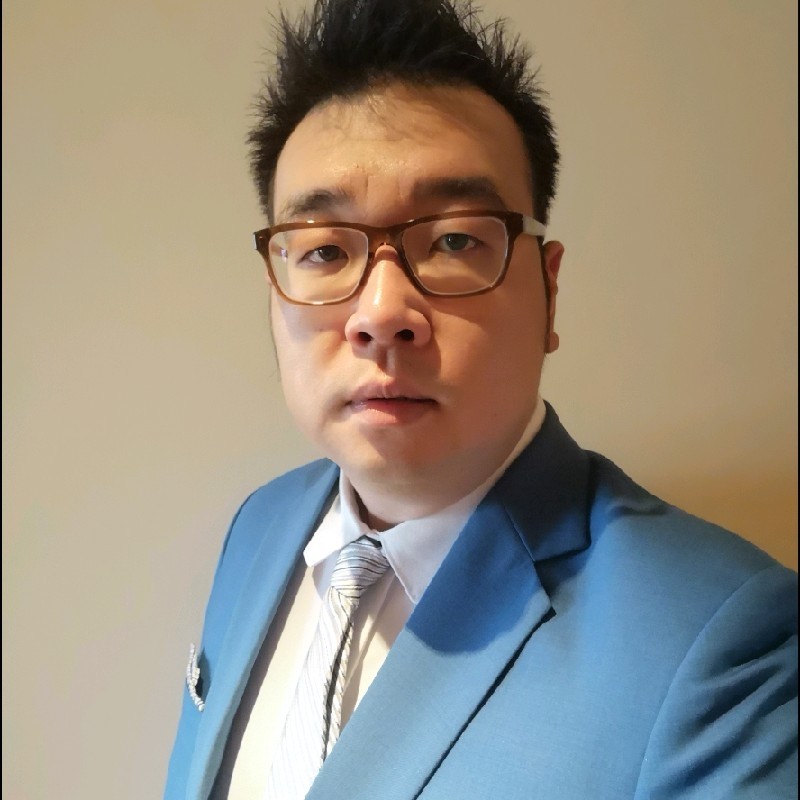
Jeremy Lee is a seasoned digital marketing director and strategist with over two decades of experience in the industry. As the founder of Sotavento Medios, I manage a diverse portfolio of over 50 businesses, helping brands grow through advanced search strategies and digital innovation. My work focuses on bridging the gap between traditional search engine optimisation and the evolving world of AI-driven answer engines.
get in touch